

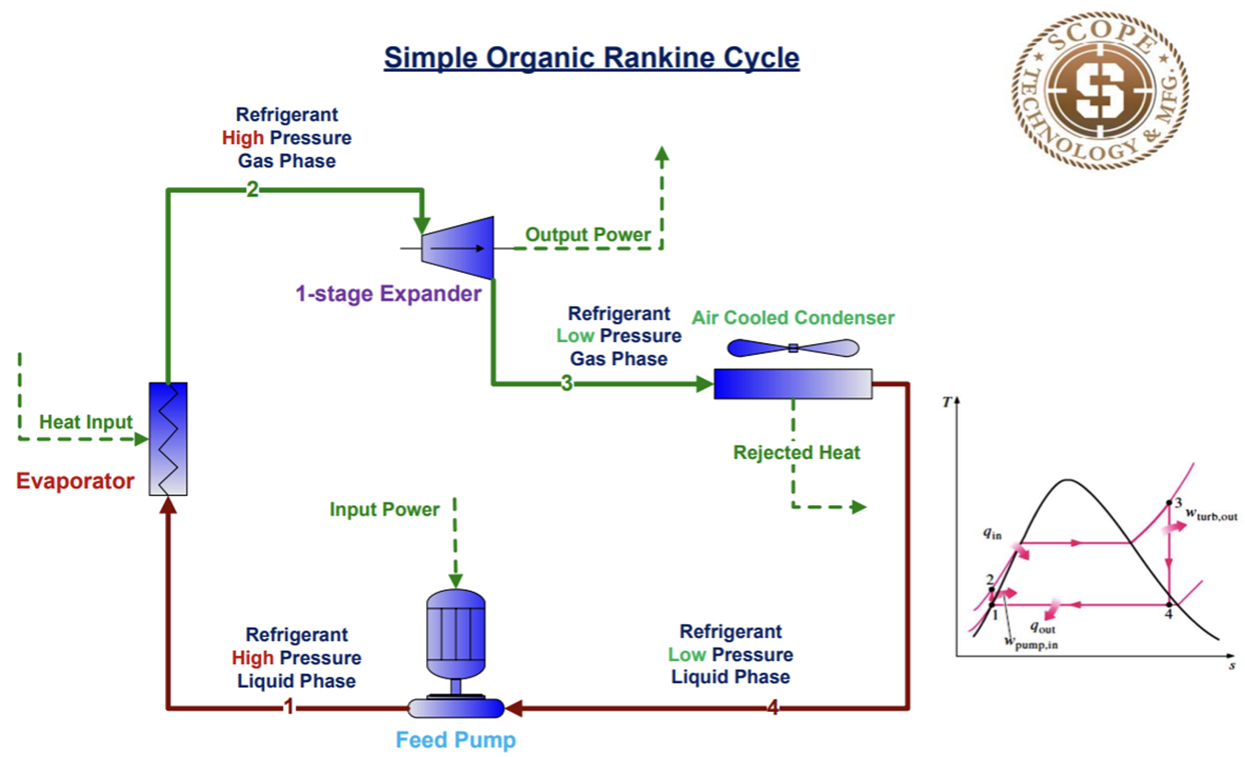
Enhancing O.R.C. Performance in Varying Environmental Conditions: A Comprehensive Analysis
In the realm of power generation and waste heat recovery, the efficiency of an Organic Rankine Cycle (O.R.C.) system is profoundly influenced by the ambient temperature conditions in which it operates. Understanding how ambient temperatures impact the cooling cycle and overall efficiency of an O.R.C. unit is paramount for engineers, technical professionals, and procurement audiences involved in the manufacturing and prototyping of O.R.C. units for diverse applications like waste heat recovery, geothermal energy, microgrids, combined heat and power (CHP) systems, as well as oil and gas processes.
The Crucial Role of Ambient Temperature in O.R.C. Performance
Impact on Cooling Cycle Efficiency
The efficiency of an O.R.C. system is intricately linked to the ambient temperature surrounding the system. Higher ambient temperatures can lead to reduced efficiency due to the decreased temperature differential between the heat source and the environment, thereby limiting the potential for generating power effectively. On the other hand, lower ambient temperatures can enhance efficiency by providing a more substantial temperature gradient for the O.R.C. cycle to leverage.
Influence on Output and Performance
Ambient temperature variations directly impact the output and performance of an O.R.C. unit. High ambient temperatures can lower the power output and efficiency of the system, potentially leading to operational challenges and decreased overall performance. In contrast, cooler ambient temperatures can optimize the O.R.C. performance, resulting in higher power generation and improved efficiency.
Strategies to Mitigate Negative Impacts and Enhance Positive Effects
Minimizing Negative Impacts
- Enhanced Insulation: Implementing superior insulation materials and techniques can help minimize the impact of high ambient temperatures on the O.R.C. system. By reducing heat exchange with the surroundings, the system can maintain higher efficiency levels.
- Optimized Heat Exchangers: Designing and optimizing heat exchangers to withstand varying ambient temperatures is crucial. Proper heat exchanger selection and sizing can mitigate the negative effects of temperature differentials on the system’s performance.
- Thermal Storage Solutions: Introducing thermal storage systems can buffer the impact of ambient temperature fluctuations on the O.R.C. unit. By storing excess heat during peak operating conditions, the system can ensure consistent performance even in challenging environments.
Amplifying Positive Impacts
- Utilizing Geothermal Resources: Leveraging geothermal energy sources can provide a consistent and sustainable heat input for the O.R.C. system. Geothermal energy offers stable temperatures regardless of external environmental conditions, enhancing system efficiency.
- Adaptive Control Systems: Implementing smart and adaptive control systems can optimize the O.R.C. unit’s operation based on real-time ambient temperature data. This dynamic control mechanism can adjust system parameters to maximize performance under varying conditions.
- Hybridization with Solar Power: Integrating solar power generation alongside the O.R.C. system can diversify the heat sources and improve overall efficiency. Solar energy can supplement the O.R.C. cycle during periods of low ambient temperatures, ensuring continuous power generation.
Bridging to Future Topics and Further Exploration
Understanding the intricate relationship between ambient temperatures and O.R.C. performance sets the stage for exploring the impact of temperature differentials on efficiency and the selection of appropriate heat sources for O.R.C. systems. Future articles in this series will delve into the nuances of heat source selection, thermal management strategies for cooling in O.R.C. units, and the broader implications of temperature differentials on system efficiency.
By delving into these interconnected topics, engineers, technical professionals, and procurement audiences can gain a holistic understanding of optimizing O.R.C. performance in varying environmental conditions, driving innovation and efficiency in the realm of power generation and waste heat recovery.
In conclusion, enhancing the performance of O.R.C. systems in diverse environmental conditions requires a nuanced approach that combines innovative strategies, adaptive technologies, and a deep understanding of the system dynamics. By proactively addressing the impact of ambient temperatures and implementing tailored solutions, O.R.C. units can achieve peak efficiency and productivity across a range of applications, from waste heat recovery to geothermal energy generation.